
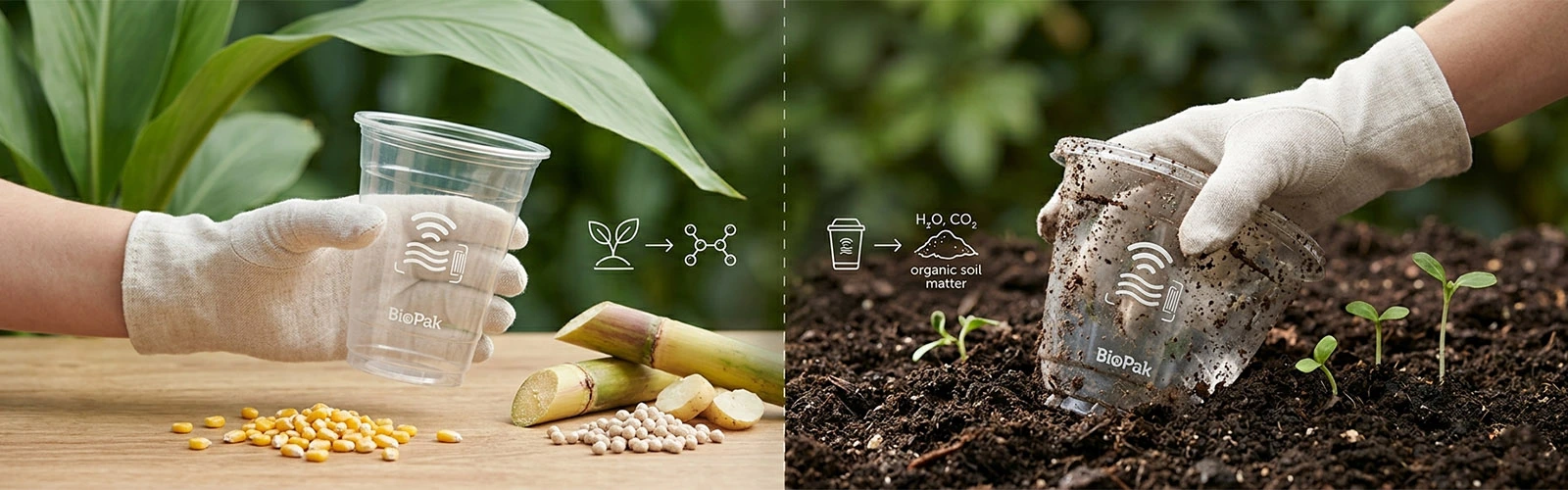
As the Australian market shifts towards a circular economy, the terminology surrounding sustainable packaging has become increasingly complex for businesses and consumers alike. Understanding the difference between bioplastic and biodegradable plastic is no longer just a matter of environmental curiosity but a commercial necessity for wholesalers and retailers looking to comply with evolving state-based single-use plastic bans.
This guide clarifies the essential definitions of what is bioplastic vs biodegradable plastic, environmental impacts and practical differences to help you navigate your next procurement cycle with confidence.
What is the difference between bioplastic and biodegradable plastic?
The primary difference is that “bioplastic” refers to the material's source (what it is made from), while “biodegradable plastic” refers to its end-of-life process (how it breaks down).
Bioplastics are typically derived from renewable biological resources like corn starch or sugarcane, whereas biodegradable plastics are designed to be consumed by microorganisms under specific environmental conditions.
While these terms are often used interchangeably in casual conversation, they represent two very different scientific concepts: origin and destination. A plastic can be made from plants but never breaks down, or it can be made from fossil fuels and be designed to disappear completely. For Australian businesses, distinguishing between these categories is essential to meet sustainable packaging standards and ensure products are disposed of correctly.
|
Feature |
Bioplastic (Bio-based) |
Biodegradable Plastic |
|
Primary Definition |
Defined by its renewable origin and plant-based feedstock. |
Defined by its chemical ability to decompose naturally. |
|
Common Sources |
Corn starch, sugarcane, cellulose or seaweed. |
Can be plant-based (PLA) or fossil-based (PBAT). |
|
End-of-Life Goal |
Reducing fossil fuel reliance and greenhouse gas emissions. |
Reducing landfill waste and environmental persistence. |
|
Recyclability |
Often recyclable if "drop-in" (e.g., Bio-PET). |
Generally not recyclable; must be industrially composted. |
|
Typical Products |
Durable containers, car parts and bio-bottles. |
Bin liners, food wraps and wholesale compostable bags. |
Biodegradable vs bio-based plastic: Are they the same thing?
Yes, biobased plastic is essentially another term for bioplastic, specifically highlighting that the carbon content in the polymer is derived from renewable agricultural or plant-based sources rather than fossil fuels. These materials use biomass such as vegetable oils, cellulose, wood chips or agricultural by-products as the feedstock for production.
The terms biodegradable vs. bio-based plastic often come up in procurement discussions because “bio-based” is a more technical descriptor used in international certifications and carbon footprinting. When a product is labelled bio-based, it indicates that the material has a reduced carbon footprint during manufacturing because it sequesters carbon from the atmosphere as plants grow.
Are bioplastics biodegradable?
No, not all bioplastics are biodegradable. While many bioplastics are designed to break down in industrial composting facilities, others are “non-biodegradable bioplastics” which are durable, recyclable and intended for long-term use.
This is perhaps the most confusing aspect of the bioplastic vs biodegradable plastic debate for many industry professionals. The global plastics industry typically divides materials into four quadrants based on their source and biodegradability.
Here is the complete breakdown of the four quadrants:
- Bio-based and Biodegradable — Plastics made from plants that also break down naturally (e.g., PLA, PHA and starch blends).
- Bio-based and Non-biodegradable — Often called "drop-in" bioplastics, these are made from plants but are chemically identical to traditional plastic and do not break down (e.g., Bio-PE and Bio-PET).
- Fossil-based and Biodegradable — Plastics made from petroleum but engineered with a chemical structure that microorganisms can digest (e.g., PBAT and PCL).
- Fossil-based and Non-biodegradable — These are your standard, everyday plastics derived from oil that persist in the environment for hundreds of years (e.g., conventional PE, PP and PVC).
What are examples of bioplastics vs biodegradable plastics?
Common examples of bioplastics include Bio-PET (used in beverage bottles) and Bio-PE, both made from sugarcane but not biodegradable. Examples of biodegradable plastics include PBAT and PCL, which are often mixed with starch to create flexible films that meet composting standards.
To further clarify the difference between bioplastic vs biodegradable, here are some specific materials frequently used in the Australian wholesale market:
- PLA (Polylactic Acid) — This is the most common bioplastic. It is both bio-based (usually from corn starch) and biodegradable (under industrial composting conditions). It is used for clear cold-drink cups, deli containers and 3D printing filaments.
- Bio-Polyethylene (Bio-PE) — This is a bioplastic but it is NOT biodegradable. It is made from ethanol derived from sugarcane. It is chemically identical to standard plastic, meaning it is durable and fully recyclable in the yellow bin.
- PBAT (Polybutylene adipate terephthalate) — This is often a fossil-based plastic, but it is fully biodegradable. It is highly flexible and is the primary ingredient in many [biodegradable mailers] and bin liners.
- PHA (Polyhydroxyalkanoates) — A rising star in the industry, PHA is both bio-based and highly biodegradable, even in marine environments. It is produced by microorganisms fermenting sugar or lipids.
These examples highlight why a blanket term like “eco-friendly” is often insufficient. A wholesaler must know whether a product is PLA or Bio-PE to advise a customer on whether it should go in a compost bin or a recycling bin.
Let's build a cleaner future for your business together
Moving towards sustainable packaging should be simple and effective. At WF Plastic, we offer decades of local expertise to help Australian businesses find the right fit for their specific needs. From choosing bio-based materials to meeting plastic bans, our team provides honest advice and reliable products. Ready to improve your environmental footprint without any extra stress? Learn more about us and see exactly how our dedicated team can support your long-term success and commercial growth starting today.
FAQs
Q: What is the difference between bioplastic and biodegradable plastic?
A: Bioplastic describes the source of the material (plants or biomass), while biodegradable plastic describes its ability to break down via microorganisms. A bioplastic is not always biodegradable, and a biodegradable plastic is not always made from plants.
Q: Is biobased plastic the same as bioplastic?
A: Yes, biobased plastic is the technical term for a bioplastic made from renewable biological resources. It focuses on the origin of the carbon in the plastic rather than how the plastic will eventually decompose.
Q: Are all bioplastics biodegradable?
A: No, many bioplastics are "durable" and chemically identical to traditional plastics. These "drop-in" bioplastics, such as Bio-PE, are intended for recycling rather than composting.
Q: Which is better for the environment: bioplastic or biodegradable plastic?
A: It depends on the application. Bioplastics are great for reducing fossil fuel use in durable goods, while biodegradable plastics are better for single-use items like food packaging that can be composted along with organic waste.
Q: What are examples of bioplastics vs biodegradable plastics?
A: Examples of bioplastics include Bio-PET bottles and PLA cups. Examples of biodegradable plastic include compostable bin liners made from PBAT and certified compostable food trays.