
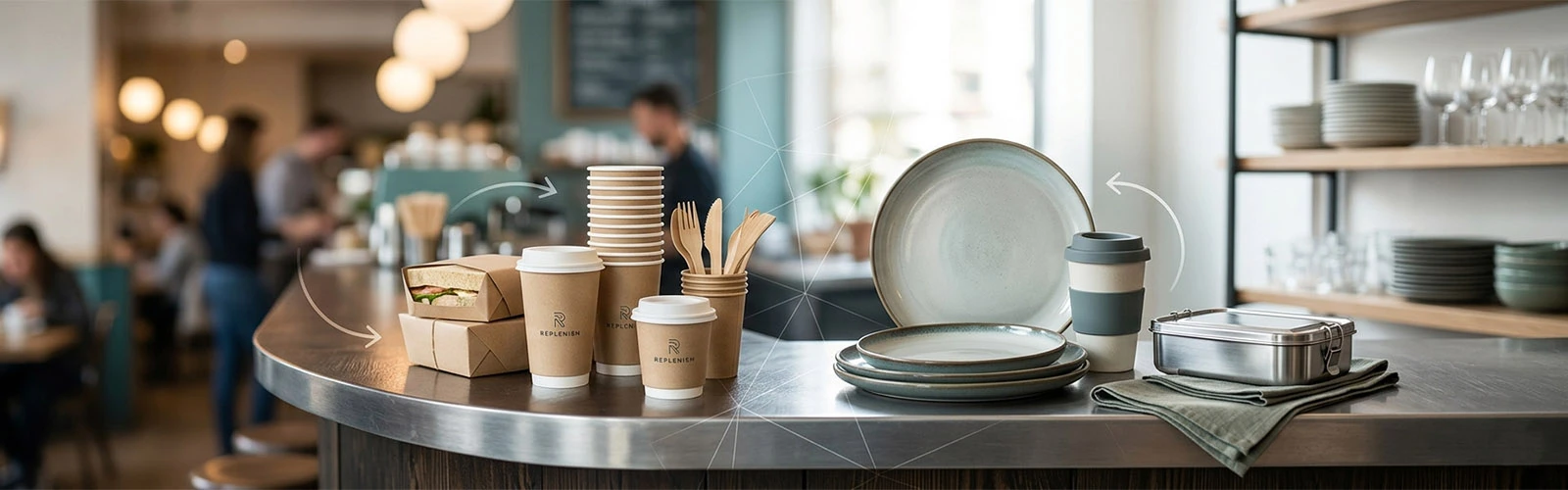
The Australian hospitality industry is shifting as sustainability moves from a niche preference to a core business requirement. This change is driven by the 2026 expansion of mandatory regulations under the National Plastics Plan, which enforces stricter waste targets nationwide. Addressing the single‑use vs reusable packaging hospitality debate is now essential for operational survival, brand reputation and legal adherence. This guide explores both systems and the compliance standards needed to future-proof your operations.
Why is the choice between single-use and reusable packaging important for hospitality?
Choosing the right packaging affects your bottom line, customer experience and legal standing within the local market.
- Legal adherence — Staying up to date with single‑use packaging compliance in Australia prevents heavy fines. As more states scrutinise plastic-lined items, choosing certified takeaway containers helps you avoid unexpected supply gaps.
- Brand reputation — Your choice impacts how diners perceive your business. Data shows that Australian consumers prioritise packaging sustainability and often choose a business based on its eco-friendly practices.
- Operational security — Understanding the transition to reusable packaging for takeaway in Australia helps you stay ahead of frequent bans while meeting the high expectations of a modern public.
Single‑use vs reusable packaging in the hospitality sector: Which is better?
The better choice depends on your specific service model. Single-use remains the standard for high-volume, mobile reusable packaging takeaway in Australia, whereas reusables are superior for closed-loop environments like office complexes or in-house dining.
Pros of Single‑use Packaging
There are several operational advantages to using single-use products in the Australian hospitality sector.
- Guaranteed hygiene — Using a fresh container for each order eliminates the risk of cross-contamination from poorly washed reusables.
- Operational efficiency — There is no need for industrial dishwashing or staff time dedicated to scrubbing and drying containers.
- Storage advantages — Most items are designed to be lightweight and stackable, saving significant space in smaller commercial kitchens.
- Lower upfront cost — The per-unit price for bulk disposables is much lower than the capital required to purchase a full fleet of reusable items.
Cons of Single‑use Packaging
Despite the convenience, there are notable drawbacks to relying solely on single-use packaging in a modern food business.
- Environmental footprint — High volumes of waste contribute to landfill volume and can lead to higher commercial waste collection fees.
- Regulatory pressure — Some states require specific leak-proof sauce containers to ensure they are not included in broader plastic bans.
- Consumer perception — Modern diners are increasingly critical of “over-packaging” and non-recyclable materials, which can impact your brand reputation.
- Supply chain reliance — Your business remains vulnerable to price fluctuations in the global packaging market, as you must constantly rebuy stock.
Pros of Reusable Packaging
Transitioning to a reusable system offers several long-term benefits for modern Australian hospitality venues.
- Sustainability leadership — It positions your venue as an industry leader, which is a major draw for diners who prioritise eco-friendly businesses.
- Premium customer experience — Heavier, more durable containers often feel higher-quality than standard disposables, improving the perceived value of the meal.
- Long-term cost savings — Once the initial purchase price is recouped, the cost-per-use can fall below that of premium single-use alternatives.
- Reduced waste levies — Generating less rubbish can lead to lower commercial waste management fees and fewer overflowing bins.
Cons of Reusable Packaging
Implementing a reusable model also presents specific challenges that venues must consider.
- High upfront costs — Purchasing a full inventory of high-quality containers requires significant capital compared to buying bulk supplies.
- Logistical complexity — You must have the space, equipment and labour for industrial-grade washing and sanitisation to meet Australian food safety standards.
- Loss and breakage — If customers do not return containers or if they are damaged, the business must bear the full replacement cost.
- Space requirements — Small venues often find that sustainable paper cups are a better fit than installing bulky return stations or drying racks.
Ready to find the perfect packaging fit for your business?
Choosing between single‑use vs reusable packaging for your hospitality business is made easier with the expert help from our team at WF Plastic. We help your business stay compliant with Australia’s single-use packaging requirements while making the shift to practical, sustainable reusable solutions with confidence.